
 CONFERENCE
Ziņa
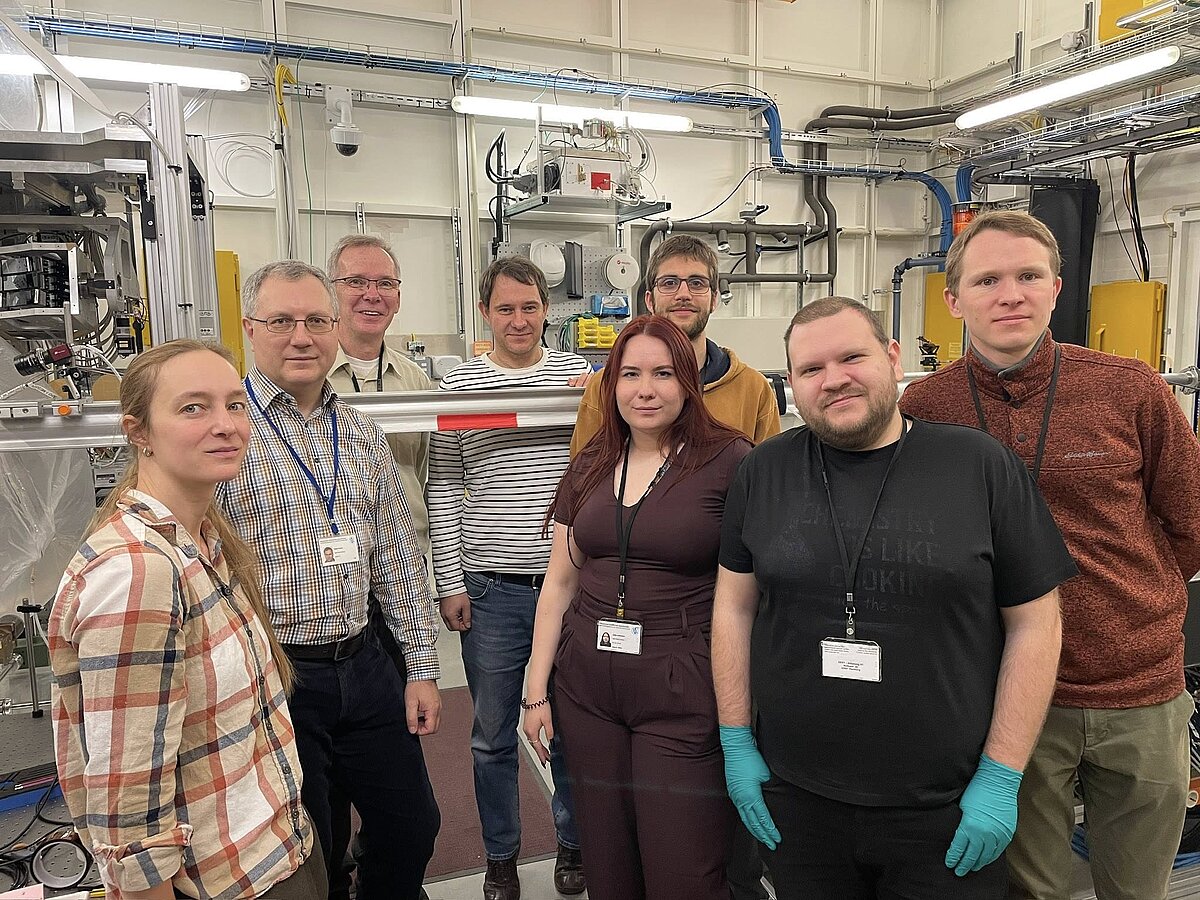
Researchers from the Institute of Solid State Physics, University of Latvia (ISSP UL) are working this week at the world-class research centre DESY PETRA III (Hamburg, Germany). PETRA III is one of the leading synchrotron centers in Europe, providing scientists with high quality experimental data on material structure and dynamics through its unique instrumentation.
Although major research centres in Europe are open to all scientists and industry, in most cases the demand far exceeds the available capacity. Therefore, to work at these world-class infrastructures, research groups submit project proposals, from which the bests are selected. Under the leadership of Aleksejs Kuzmins, Head of the EXAFS Spectroscopy Laboratory, the ISSP UL research team has secured the opportunity to use the synchrotron for their scientific study. This time, the researchers conducted three experiments on thermoelectric materials and oxide nanoparticles, supported by Latvian Science Foundation and PostDoc projects.
The effects of different components on the structure and thermoelectric properties of promising multicomponent chalcogenide compounds, as well as the lattice dynamics of CuI-based nanomaterials, were explored. These studies are important for developing novel thermoelectric materials with optimal properties for practical applications in waste heat recovery and solid-state cooling.
High-resolution X-ray absorption spectroscopy was used to study the chromic properties of tungsten oxide nanoparticles under hydrogen intercalation. The results obtained will contribute to the development of smart materials and coatings. In spring 2026, the studies will continue by analysing the material’s structure when it is excited with a laser beam with super short time dependence.
ISSP UL researchers emphasise that working at PETRA III not only provides access to infrastructure that is not available in Latvia but also strengthens scientific cooperation between the institute and international partners. Moreover, participation in such international measurement campaigns is of great value for the professional development of young researchers, offering hands-on experience with top-level infrastructure and supporting their growth in the global research environment. “We wish to be leaders in X-ray absorption spectroscopy methodology and research,” says ISSP UL Director Andris Anspoks, who is also part of the project team. “That’s why we have to become even more advanced.”
